Back
Nomi logo
UX Case Study · Fintech SaaS

From Financial Noise to Product Clarity

Transforming a complex fintech dashboard into a calmer, clearer, and more decision-friendly SaaS experience.

5 Minutes Read
TAKEAWAYFrom data overload to decision clarity.
Redesigned Nomi payroll dashboard shown in a laptop
01  ·  The Product

Meet Nomi — The Fintech Command Center

Nomi is a cloud-based fintech SaaS platform that helps businesses manage, monitor, and understand financial operations through dashboards, reports, and data-driven workflows. Since users handle complex, sensitive data, the experience had to support three core needs.

Faster financial understanding

Surface what matters first so insight comes in seconds, not minutes.

Clearer KPI visibility

Make the most important metrics impossible to miss at a glance.

Decision-making confidence

Help users trust the data enough to act without second-guessing.

The challenge was not to make the UI look modern — it was to make complex financial data easier to understand.

02  ·  The Problem

Where the Dashboard Started Breaking Down

Problem statement

Users needed a faster, clearer way to understand financial performance, track key metrics, and take action — without spending time decoding the dashboard.

The dashboard had the data — but it wasn't guiding the user.

Weak visual hierarchy

High cognitive load

Poor scanability

Unclear data grouping

Competing elements

Low action clarity

03  ·  Before

Data Everywhere, Direction Nowhere

Before
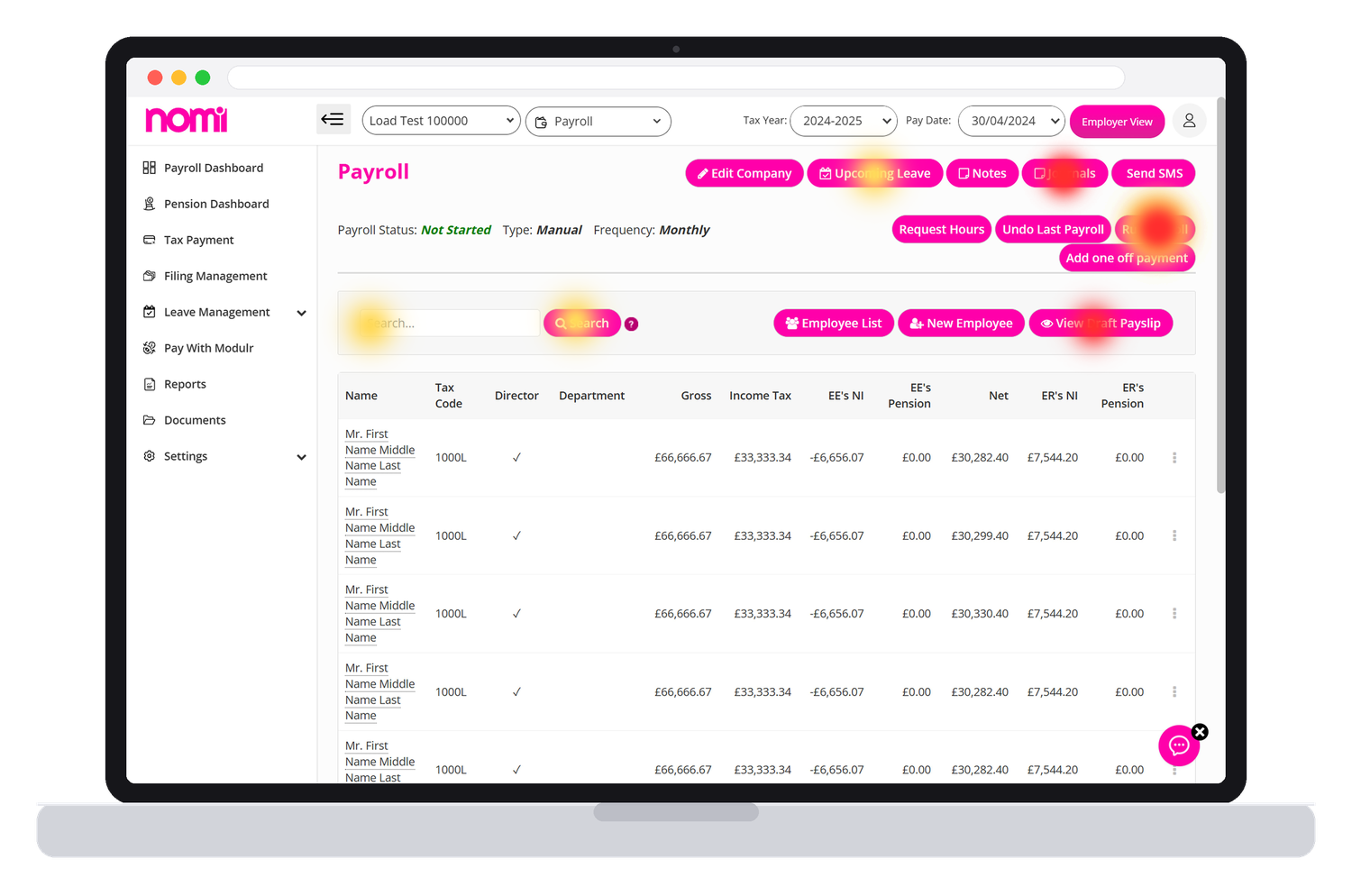
Original Nomi payroll screen shown in a laptop
What users ran into
Weak KPI priority
High visual noise
Unclear grouping
Hard to scan quickly
Action area lacks focus

The screen was useful — but not easy.

04  ·  Research

Listening Before Redesigning

Before touching the UI, research uncovered how users actually interacted with the dashboard.

User interviews

UK-based sessions via Microsoft Teams.

Hotjar heatmaps

Mapped attention, clicks & ignored zones.

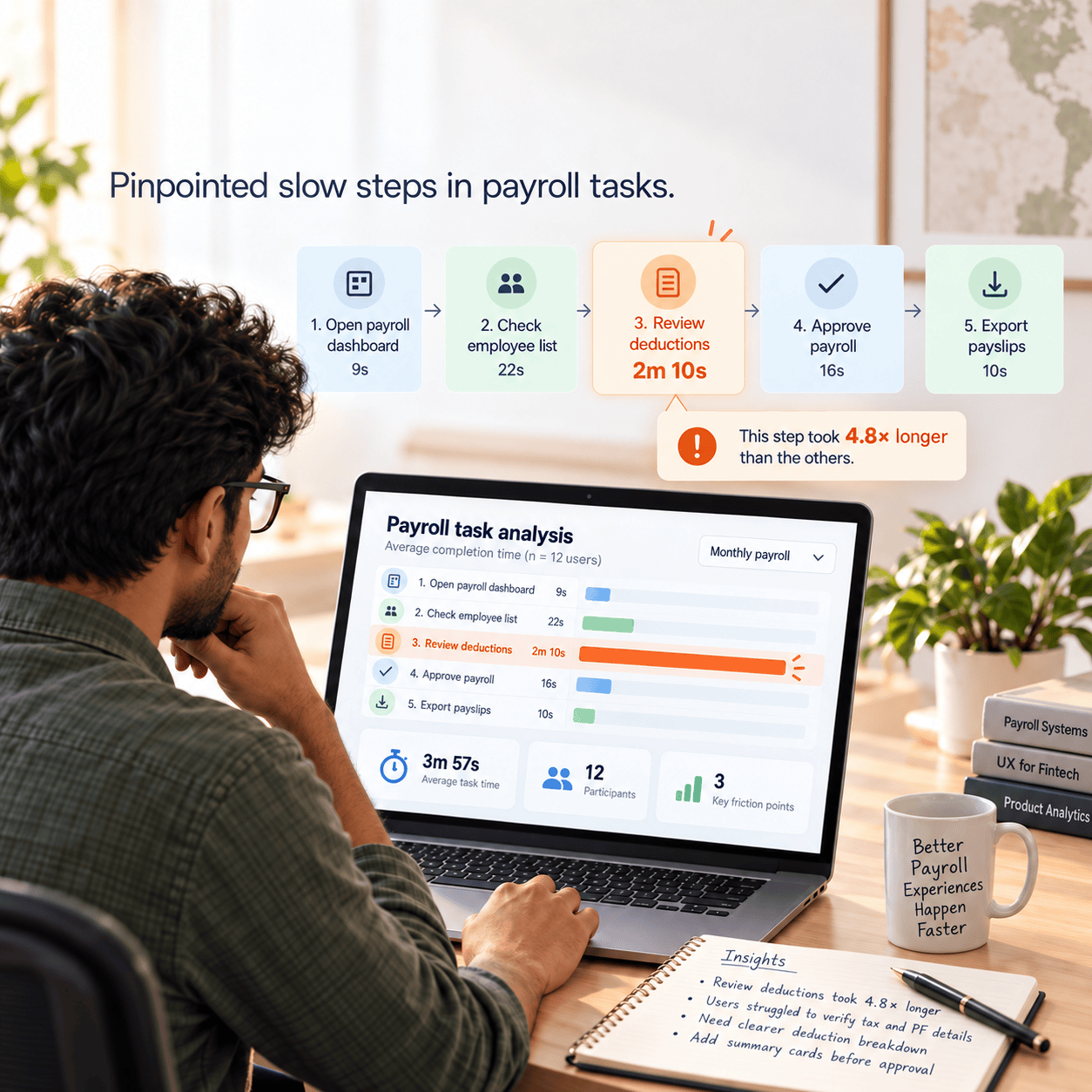
Time-on-task

Pinpointed slow steps in key tasks.

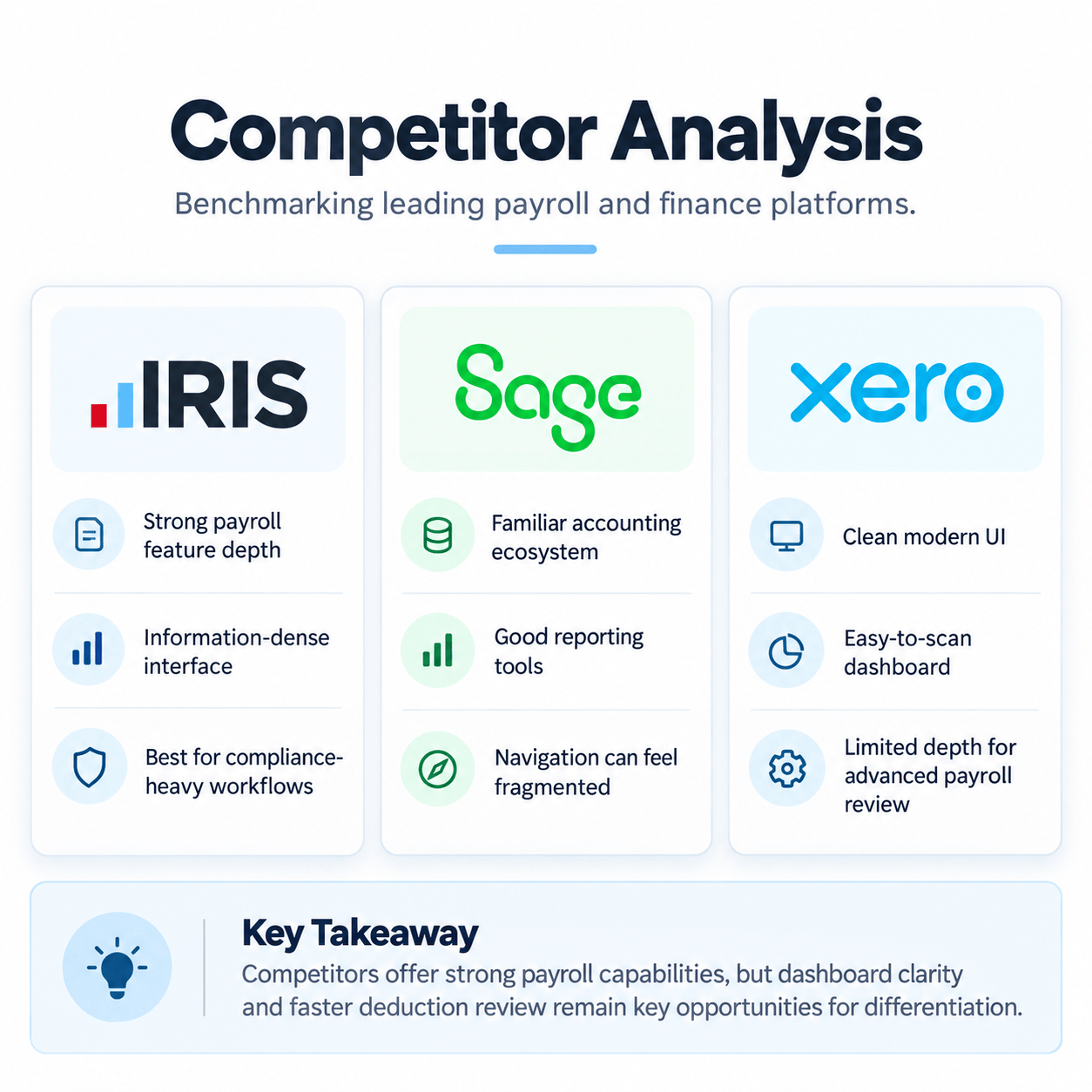
Competitor research

Benchmarked SaaS patterns with Perplexity.

Internal alignment

Worked with product & dev teams.

WHAT WE LEARNED
Users scanned — they didn't read everything.
Important metrics weren't getting attention.
The dashboard needed clearer hierarchy & grouping.
05  ·  Strategy

Turning Insights into Design Decisions

HOW MIGHT WEredesign the Nomi dashboard so users understand key financial performance faster, reduce cognitive effort, and act with more confidence?

Design decisions

Prioritize key KPIs at the top
Improve primary vs secondary hierarchy
Group related information clearly
Reduce unnecessary visual noise
Refine spacing, alignment & rhythm
Strengthen CTA & action visibility
DESIGN THINKING FLOW
Empathize Define Ideate Prototype Validate
06  ·  After

Calm, Clear, Actionable

After
Redesigned Nomi payroll dashboard shown in a laptop
What changed
Reorganized for scanability
Prioritized key financial metrics
Cleaner KPI card structure
Better spacing & visual rhythm
Clearer section grouping
Actions made more visible
Tools
Figma Claude Design HTML Prototype

Before: “Where should I look?”  →  After: “I know what matters now.”

07  ·  Comparison

Side-by-Side — What Changed & Why

Before
Before screen
After
After screen
Reduced cognitive load
Improved hierarchy
Better KPI priority
Clearer architecture
Consistent system
Faster understanding
08  ·  Impact

Proof Beyond Pretty Screens

35%
Reduction in time on task
42%
Better key-metric discovery
28%
Fewer misclicks
31%
More KPI-card engagement

Measured improvement by metric

Time on task
35%
Metric discovery
42%
Misclicks
28%
KPI engagement
31%

* Placeholder benchmarks — replace with live Hotjar data when available.

Validated with Hotjar & task observation

Improved scroll focus toward priority sections
Higher user confidence during feedback sessions
Same data — now easier to read, trust & act on
Nomi logo
The Thought That Guided It
Good fintech design does not simplify the data. It simplifies the way people understand the data.

For Nomi, the redesign transformed a crowded dashboard into a clearer, calmer, and more decision-friendly product experience.

Faster understanding Lower cognitive load Better trust Confident decisions
Thank you.